
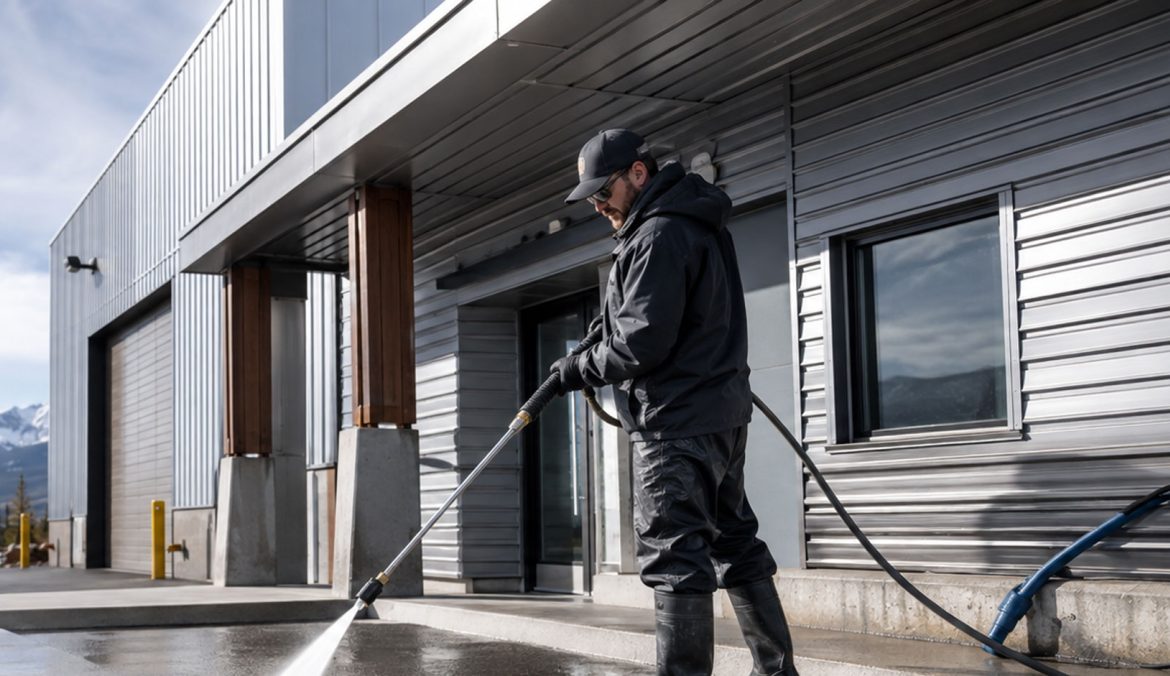
Commercial Pressure Washing in Whitehorse: Choosing the Right Method
Commercial pressure washing can make a dramatic difference to a dirty walkway, loading area or durable exterior surface. However, too much pressure or the wrong nozzle can damage siding, seals, coatings and joints. Therefore, property managers should not simply ask, “Can we pressure wash this building?” Instead, they should ask, “What method suits each surface?”
Whitehorse commercial properties can collect road grit, windblown dust, organic debris and stains from daily traffic. As a result, entrances and service areas often show buildup first. A professional exterior-cleaning plan should identify the material, the type of dirt and the drainage conditions before the cleaner selects any equipment.
Glacier Clear provides pressure washing and siding cleaning among its commercial exterior cleaning services in Whitehorse. This guide explains where pressure can help, where the cleaner must use caution and what information to include when requesting a quote.
Pressure Washing, Power Washing and Siding Cleaning
People often use “pressure washing” and “power washing” to describe the same general service. Although searchers may use either term, the actual method matters more than the name. For example, water pressure, flow, nozzle distance, temperature and cleaning solution all influence the result.
Siding cleaning is broader. Some exterior walls may tolerate controlled pressure, while others need lower pressure, a suitable cleaning solution, gentle scrubbing or a light rinse. In short, a responsible cleaner will not treat every building exterior like a concrete sidewalk.
Commercial Surfaces That May Suit Pressure Washing
Cleaners often consider pressure washing for durable exterior areas such as:
- concrete sidewalks and entry pads;
- some loading and service areas;
- durable masonry, where condition and joints allow;
- certain parking-area surfaces;
- exterior stairs and landings made from suitable materials;
- waste or bin areas, subject to drainage and site requirements;
- selected building surfaces after a material assessment.
Still, this is not a universal approval list. Age, cracks, previous repairs, paint, sealers and surface condition can change what is safe. Therefore, the cleaner may test a small area and adjust the settings before tackling a large or highly visible section.
Surfaces That Require Extra Caution
High pressure can force water behind siding, strip coatings, mark softer materials or damage aging joints. For that reason, cleaners need extra care around:
- painted or stained finishes;
- vinyl or metal siding with loose panels or vulnerable seams;
- wood and composite materials;
- stucco, EIFS and other finished wall systems;
- older brick, mortar or repaired masonry;
- window frames, door seals and electrical fixtures;
- signage, decals and exterior lighting;
- areas with failed caulking or visible building-envelope concerns.
Do not use pressure washing as a substitute for professional glass cleaning. Concentrated spray can affect seals, frames and nearby parts. Instead, Glacier Clear's commercial window cleaning service uses methods designed for glass.
Why Commercial Siding Needs Its Own Assessment
Siding creates a large, highly visible surface with many joints and material changes. For example, one wall may include metal panels, painted sections, vents, trim, windows and sealants within a few metres. Consequently, the safest method for one part may not suit the next.
- Before starting commercial siding cleaning, the cleaner should consider:
- the siding material and manufacturer guidance;
- age and visible condition;
- loose panels, cracks or failed seals;
- the type and severity of dirt or staining;
- landscaping, signs and fixtures near the work;
- where rinse water will travel;
- access around customers, vehicles and tenants.
The goal is to remove surface buildup without creating a new maintenance problem. In some cases, a gentler process will take longer. However, it may also protect the finish more effectively.
How to Plan Commercial Pressure Washing
Confirm the scope
First, identify the exact walls, walkways, pads or service areas that need attention. Photos can help, but large properties may require a site visit.
Inspect the materials
Next, note cracks, loose siding, peeling coatings, repaired joints, damaged caulking and sensitive fixtures. Cleaning does not replace repair work. Therefore, document existing defects before cleaning begins.
Review water and drainage
Then, consider access to water, pedestrian routes and where runoff will travel. Wastewater that contains grease, chemicals, paint or other contaminants may require controls beyond ordinary exterior cleaning.
Coordinate business operations
Also, entrances, loading zones and parking areas may need temporary access restrictions. Choose a time that lets the crew clean safely without creating unnecessary conflict with customers, tenants or deliveries.
Choose the method after the assessment
Finally, do not request maximum pressure as if more force guarantees a better result. The cleaner should choose the gentlest effective approach for the surface and dirt.
How Often Should Businesses Clean Commercial Exteriors?
Frequency depends on use and exposure. For example, a busy concrete entrance may need regular attention, while a property manager may clean siding only when visible buildup justifies it. Likewise, properties near traffic, active service areas or exposed sites may show dirt sooner than sheltered buildings.
Inspect the exterior during spring maintenance, before major events and when planning window or eavestrough service. In addition, combining suitable exterior tasks may simplify site access and coordination. However, each service should keep its own method and scope.
Frequently Asked Questions
Is pressure washing safe for all commercial siding?
No. A professional must first assess the material, condition, coating, seams and nearby parts. Some siding needs controlled low pressure or another gentle cleaning method.
Can pressure washing remove every stain?
No. Results depend on the stain, surface and how long the mark has remained. For instance, rust, oil, paint, mineral deposits and organic growth may need specific treatment. Some marks may also remain permanent.
Is power washing different from pressure washing?
Customers often use the terms interchangeably. However, some providers use “power washing” to describe heated water. Because terminology varies, ask what method, temperature and pressure the cleaner proposes for your property.
Should a pressure washer clean commercial windows?
No. Pressure washing does not replace professional window cleaning. Glass, frames and seals require a suitable window-cleaning method.
Request Commercial Pressure Washing in Whitehorse
Glacier Clear can assess suitable walkways, exterior areas and siding. Then, the team can recommend a method based on the surface and type of buildup. Call (867) 334-0110 or email info@glacierclear.ca to request a commercial pressure-washing or siding-cleaning quote in Whitehorse.