
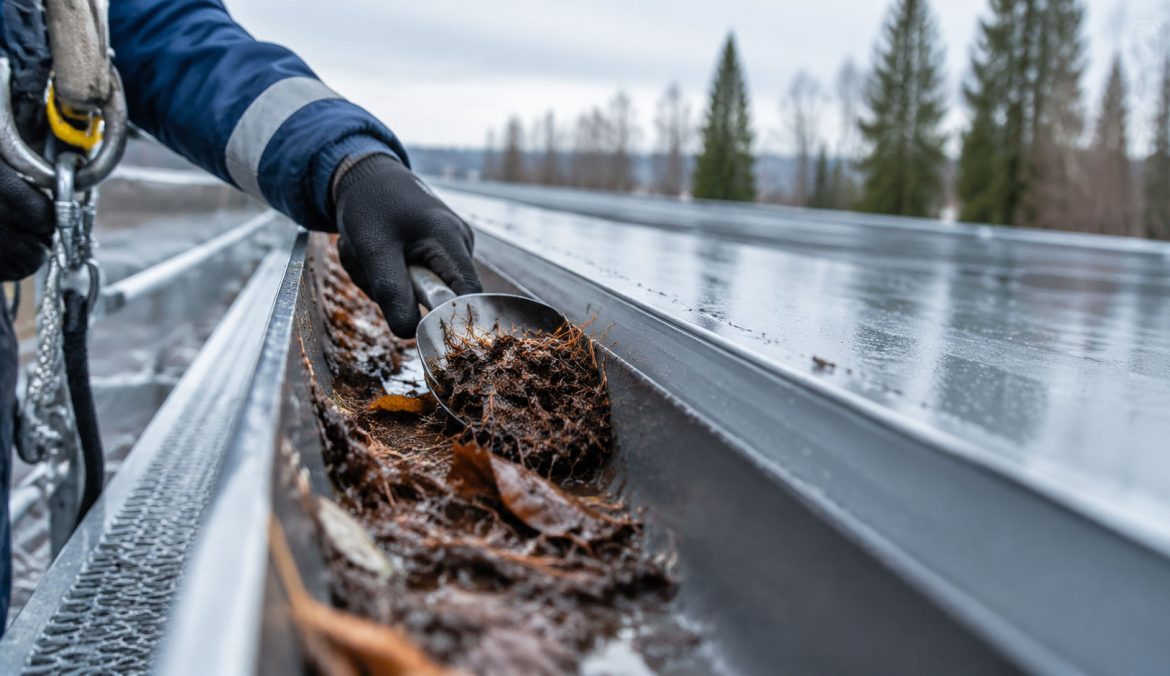
A Commercial Gutter Cleaning Schedule for Whitehorse Properties
A commercial gutter cleaning schedule can be easy to postpone because much of the system sits above the normal line of sight. As a result, a property manager may not notice a blockage until water spills over an edge, debris becomes visible or staining appears around the roofline. By that point, the system may have drained poorly for some time.
In Canada, “gutter” and “eavestrough” often refer to the same roof-edge channel. Because searchers use both phrases, this guide uses them interchangeably. Whatever term you prefer, the maintenance goal remains simple: keep the channels and accessible downspout openings clear so water can follow the intended drainage path.
Glacier Clear provides professional eavestrough cleaning in Whitehorse for commercial buildings, condo properties and residential complexes. A planned schedule can make this work easier to budget and coordinate.
Why Commercial Properties Need a Site-Specific Schedule
A generic “once a year” rule may suit one building but fail the property next door. Therefore, base the cleaning frequency on several factors:
- the number and type of nearby trees;
- roof area, pitch and drainage layout;
- valleys or sections that direct debris toward one point;
- the height and accessibility of the eavestroughs;
- wind exposure and organic debris;
- previous overflow or drainage concerns;
- the number of buildings in the property;
whether residents, tenants or staff can report problems promptly.
For example, a large condo complex with mature trees may need more frequent attention than an open commercial building with little overhead vegetation. The schedule should reflect the buildup that staff and cleaners actually observe rather than a universal calendar.
The Best Times to Inspect and Clean Eavestroughs
After leaves have fallen
Late-season leaf drop can fill roof-edge channels quickly. Therefore, many Whitehorse properties benefit from an inspection after the surrounding trees shed their leaves but before winter conditions make access more difficult.
During spring maintenance
Spring offers another chance to identify debris from the previous season and observe how the system handles meltwater and rain. If debris blocks channels or accessible downspout openings, schedule cleaning.
After wind or unusual debris events
Strong wind can move leaves, needles and loose debris onto roofs. Consequently, a targeted inspection may help after an event, especially when the property has a history of blockage.
Before exterior maintenance or a property inspection
You can coordinate eavestrough cleaning with other exterior work when access and scheduling make that practical. However, keep it separate from pressure washing and give it its own tools and scope.
Signs a Commercial Gutter System Needs Attention
Property staff do not need to climb onto the roof to notice every warning sign. From a safe ground-level position, watch for:
- water spilling over the edge during rain;
- visible leaves, needles or plant growth;
- staining on fascia, siding or the wall below;
- water emerging from an unexpected joint;
- one downspout flowing while another appears inactive;
- debris collecting at accessible outlets;
- reports of water pooling near entrances or walkways.
However, these observations do not identify the exact cause. Overflow may result from debris, a blocked downspout, limited capacity, damaged parts, ice or another drainage issue. Cleaning addresses removable buildup, while repairs, redesign and ice management require separate services.
A Practical Three-Step Maintenance Plan
1. Inspect from the ground throughout the year
First, ask maintenance staff to observe the building during rain when they can do so safely. Record where overflow occurs and take photos. This information helps the cleaner focus on recurring problem areas.
2. Schedule the main seasonal cleaning
Next, choose the time based on surrounding trees and building history. For many properties, post-leaf-drop cleaning offers a logical primary appointment. However, others may prioritize spring or use both seasons.
3. Review the results and adjust the interval
After cleaning, note how much debris the crew removed and which sections filled first. If heavy debris blocked the system, shorten the interval or add a targeted inspection. On the other hand, if the crew found very little buildup, keep the existing schedule.
Ultimately, this feedback loop produces a more useful plan than automatically booking the same frequency forever.
Commercial and Condo Cleaning Requires Coordination
Cleaning one home's eavestroughs differs from servicing a commercial building or multi-building condo development. For that reason, larger properties may require:
- building maps or clearly defined service areas;
- coordination with tenants, residents or a condo board;
- access to locked yards, roofs or service corridors;
- parking restrictions near work areas;
- protection of entrances and pedestrian routes;
- documentation of visible concerns;
- phased scheduling across several buildings.
When requesting a quote, provide the number of buildings, approximate storeys, photos and known access issues. In addition, the cleaner may need a site visit before preparing a reliable scope.
What Professional Eavestrough Cleaning Does and Does Not Include
The cleaning scope should state whether the crew will remove leaves and loose debris from accessible channels, check accessible downspout openings and clean up material from the system.
Do not assume cleaning includes every roof or drainage service. Ask separately about:
- internal downspout blockages;
- gutter repairs or replacement;
- loose brackets or slope correction;
- roof cleaning;
- ice-dam removal;
- underground drainage;
- water-damage investigation.
If the cleaner observes a visible maintenance concern, they can report it to the property manager. However, diagnosis and repair may require a qualified roofing, drainage or building professional.
Why Pressure Washing Is Not the Default Gutter-Cleaning Method
Do not describe eavestrough cleaning as simply blasting the system with a pressure washer. High-pressure water can spread debris, force water into vulnerable areas and create unnecessary runoff. Instead, crews normally remove loose material through a controlled process that suits the building and access conditions.
Pressure washing may work as a separate exterior service for suitable ground surfaces. However, do not bundle it into gutter cleaning without a clear reason and surface assessment.
Frequently Asked Questions
How often should Whitehorse businesses clean commercial gutters?
Many properties start with one or two inspections or cleanings per year. Then, they adjust the schedule based on nearby trees and actual buildup. Buildings with heavy leaf or needle exposure may need more frequent service.
Is gutter cleaning the same as eavestrough cleaning?
Yes. People commonly use both words for the same roof-edge drainage channel. “Eavestrough” is common Canadian terminology, while many people search online for “gutter cleaning.”
Does cleaning include gutter repairs?
Not automatically. Cleaning removes appropriate debris; repairs, replacement and drainage redesign are separate scopes. Confirm requirements when requesting the quote.
Can a condo corporation arrange service for several buildings?
Yes. Glacier Clear serves condo properties and residential complexes. Therefore, provide building counts, access details and photos so the cleaner can plan and schedule the work appropriately.
Book Commercial Gutter Cleaning in Whitehorse
Contact Glacier Clear for commercial and condo eavestrough cleaning in Whitehorse. Call (867) 334-0110 or email info@glacierclear.ca to build a site-specific schedule and request a quote.